Storm Damage Restoration · San Antonio
Storm Damage Restoration in San Antonio — Roof Leak to Final Paint, One Contractor
Wind, hail, wind-driven rain and burst freeze lines all end the same way: a wet ceiling, a soaked wall, and a carrier deciding what it owes. We document the interior loss, dry the structure, and rebuild it — one licensed and insured GC from the first walkthrough to the last coat of paint.
Interior Loss, Documented
Photo documentation and a measured record of every wet ceiling, wall and cabinet before demo starts, so nothing gets written out of the claim later.
Xactimate In-House
Our estimate is written in the same platform your adjuster uses, which is how our scope and the carrier's line up line for line.
Dry-Out and Rebuild
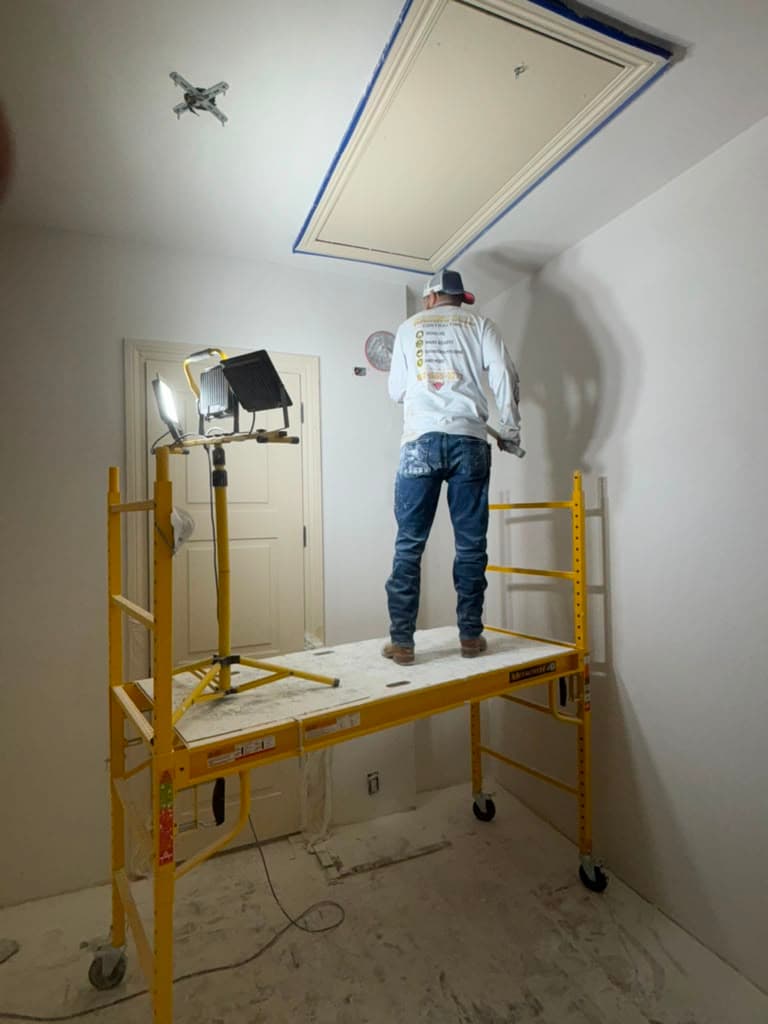
Extraction, structural drying, then drywall, texture, paint and flooring from the same crew. No second contractor to find.
Licensed & Insured GC
Serving San Antonio since 2010. General Liability and Workers' Comp — certificates available on request.
The storm is the easy part to see
What costs homeowners money is the part nobody looks at: the wet insulation above the ceiling, the swollen bottom plate behind the baseboard, the subfloor under a floor that still looks fine. Most restoration companies dry out what is obvious and hand you a list of rebuild contractors, and most general contractors will not touch wet demo at all. Raging Bull does both halves, so the crew that finds and dries the damage is the same licensed and insured GC that rebuilds it — and the scope your carrier reads was written by people who stood in the room. Storm losses are part of the wider water, fire and storm restoration work we do across the metro.
Active leak right now? Call (512) 665-1073.
Get the loss documented before it gets argued about
Free walkthrough, moisture readings, and a written Xactimate scope your adjuster can read line for line.
What San Antonio storms actually do to a house
Four local patterns behind most of the storm losses we get called out to.
We sit in Flash Flood Alley
The Texas Water Development Board's 2024 State Flood Plan describes the Central Texas corridor along the Balcones Escarpment, running from Dallas through Austin and down past San Antonio, as Flash Flood Alley. It gives the reasons as steep terrain, shallow soil and intense rainfall rates. Shallow soil over limestone cannot absorb a heavy rain, so the rain runs instead. For a house, that means roof and wall assemblies take the whole rainfall rate at once.
Rising water is a different animal than a roof leak
Water that comes from above, or from a pipe inside the house, is one conversation with your carrier. Water that rises from outside is another: flash flooding and a creek out of its banks are excluded from standard homeowners policies and need separate flood coverage. Which one happened to you changes the entire claim, and it is the first thing we establish on the walkthrough.
Our storm season includes the freeze
February 2021 showed every contractor in this city what an uninsulated attic line does in a hard freeze, and the pattern repeats on a smaller scale most winters. Pipes in attics, garages and exterior walls split while frozen and stay quiet, then release water when the thaw comes. If your house went through a freeze and a ceiling stained or a closet started smelling musty afterward, that is worth a moisture reading.
Hail opens a roof without looking like it
A hail-bruised shingle can pass a glance from the driveway and still leak at the next rain. The interior usually tells on it first: a ceiling stain, a soft spot in drywall, a line of blistered paint. We document the interior loss properly, because that record is what holds up the rest of the claim.
Before you call your carrier, it is worth knowing which water a Texas policy covers and which it excludes: what homeowners insurance covers for water damage in Texas →
Four storm losses, one contractor
Roof leaks and ceiling damage
Wind or hail opens the roof, and the water shows up two rooms away as a stained, sagging ceiling. We open and dry the ceiling cavity, document the insulation and framing, and rebuild the ceiling, drywall, texture and paint. The roof covering itself we coordinate, so the hole above and the damage below get handled on one plan instead of two.
Wind-driven rain at windows and doors
Horizontal rain gets past window flanges, door thresholds and failed caulk joints that never leak in an ordinary shower. The damage hides in the wall below the sill: wet insulation, swollen baseboard, flooring coming apart at the wall line. A meter finds it; a walk-through of the room does not.
Frozen and burst supply lines
Lines in an unheated attic, an exterior wall or a garage freeze, split, and then release when everything thaws, which is why the damage usually appears after the weather has cleared rather than during it. Attic bursts are the worst of them, because the water runs the length of a ceiling before anyone sees a stain.
Full reconstruction after the dry-out
Framing, drywall, texture matching, paint, flooring, tile, cabinets and trim. Remodel-grade finishes on restoration timelines, from the GC that does remodels for a living.
From first walkthrough to closed claim
Assess & Document
Walkthrough, moisture readings, photo documentation, and a written Xactimate estimate in the format adjusters expect, before any demo starts.
Dry It Out
Extraction, air movers and dehumidifiers, and demo of what cannot be saved. Moisture readings decide when the structure is dry, not the calendar.
Rebuild
The same licensed GC crew puts it back: framing, drywall, hand-matched texture, paint, flooring, cabinets. No handoff and no gap.
Work the Claim
Supplements submitted the moment demo uncovers damage nobody could see on day one, with the photos and readings behind them.
Six moves that protect your home and your claim
What you do before a crew shows up decides how much gets saved, and how much your carrier pays for.
Make it safe before you make it dry
Water near outlets, cords or a panel wall means the breakers to those rooms go off first. A sagging, water-heavy ceiling is a collapse risk, so stay out from under it.
Photograph it before you touch it
Wide shots and close-ups: the stain, the standing water, the contents. Your claim is built from what you can show, and nothing you have already cleaned up is in it.
Stop the water if a pipe is the source
Main shutoff, usually at the meter box by the curb or where the line enters the house. For a roof leak, catch and drain it rather than chase it.
Open the claim, commit to nothing
Report the loss so the clock starts. Do not accept a scope, a preferred vendor or a settlement figure on day one.
Get drying started, not just mopping
Surfaces dry long before the structure does. Extraction and real drying equipment inside the first couple of days is what keeps a storm loss from turning into a mold job.
Keep every receipt
Tarps, a fan you bought, a motel night if the house was unlivable. Mitigation costs and loss of use are often part of the claim, and only the documented ones get paid.
Your insurance company has an adjuster. Now you have one on your side.
When you file a claim, your carrier sends an adjuster whose job is to close the loss for as little as the policy allows. Most homeowners face that alone — and settle for a check that never covers the real damage. Not with Raging Bull. Our in-house insurance department goes to work for you: we document every dollar of damage, write the scope in the carrier's own software, and fight to get your claim paid for what it actually takes to rebuild.
We DocuSketch every loss
A full 3D scan and measured floor plan of your property, captured before demo. Hidden and secondary damage goes on the record — and an adjuster can't shortchange what's documented.
We submit the supplements
When we open a wall and find damage no one could see from the doorway, we photograph it, add it to the scope, and file the supplement — so it's covered by your carrier, not eaten by you.
You stay our client
First walkthrough to final invoice, we work for you — not the carrier. We don't stop pushing until your home is restored and your claim reflects the full loss.

All carriers. Property managers and adjusters: we already run make-ready and water-damage repairs for one of the largest property management companies in Texas across San Antonio multifamily properties. Direct line for portfolio work: apartment make-ready & unit turns.
Storm restoration across Greater San Antonio
- San Antonio
- Alamo Ranch
- Stone Oak
- Northwest Side
- Northeast Side
- Medical Center
- Schertz
- Converse
- Universal City
- New Braunfels
- Cibolo
- Boerne
We also take water, fire and storm losses down the US-57 corridor and out US-90 to Eagle Pass, Del Rio and the counties between.
Start the file
Call (512) 665-1073 for an active leak. Otherwise send the property details and what failed, and we will get an assessment walkthrough scheduled and your loss documented.
San Antonio storm damage restoration FAQ
- It depends which way the water came. Damage from above, like wind or hail opening the roof or rain driven past a window, is generally covered as sudden and accidental, and so is a pipe that bursts in a freeze. Water that rises from outside the house is a different category: flash flooding, a creek out of its banks and street flooding are excluded from standard homeowners policies and need a separate flood policy, usually through the National Flood Insurance Program. Read your own policy, and read our plain-English walkthrough of what Texas policies cover before you call your carrier.
Water coming through the ceiling?
Call and we will tell you straight what we can commit to today. Or send the property details and we will schedule an assessment walkthrough.