Fire, Smoke & Soot Restoration · San Antonio
Fire & Smoke Damage Restoration in San Antonio — Demo to Final Paint, One Contractor
Licensed and insured GC handling the full loss: soot and odor demo, structural repair, and complete rebuild. Your carrier has an adjuster working to pay less — we fight to get your claim paid for what it truly takes to rebuild.
One contract, mitigation through rebuild: Single-Contract Restoration.
We Fight Your Claim
Fire losses are big claims. Our in-house insurance department documents the full scope and pushes your carrier to pay it.
DocuSketch Every Loss
A full 3D scan and measured floor plan — smoke and soot damage on the record before demo starts.
Demo + Rebuild In-House
Soot removal and odor demo through final paint — one licensed GC crew, no handoff.
Licensed & Insured GC
Serving San Antonio since 2010. General Liability and Workers' Comp — certificates available on request.
From soot cleanup to the last coat of paint
A fire is followed by a second disaster: the cleanup and rebuild. Most restoration companies handle the soot and demo, then hand you a gutted shell and a list of contractors. Most general contractors won't touch a fire loss at all. Raging Bull does both — the same licensed and insured GC that removes the fire and smoke damage rebuilds your home, so there's one accountable contact from the first walkthrough to the final coat of paint.
Emergency? Call (512) 665-1073 now.
Fire, smoke, and soot — cleanup through rebuild
Every loss gets the same treatment: document it, demo what can't be saved, kill the odor at the source, and rebuild to remodel-grade finish — under one roof.
Structural Fire Damage
Demo of charred framing, drywall, insulation, and finishes, followed by full structural rebuild — framing, drywall, paint, flooring, and cabinets by the same GC.
Smoke & Soot
Removal of soot-coated and odor-holding materials that cleaning can't save, plus sealing and rebuild of the surfaces that stay. Smoke travels further than the flames — we document all of it.
Odor Removal
Persistent smoke odor lives in porous materials. We remove what holds it, seal what remains, and coordinate specialized odor treatment when a loss calls for it — so the smell is gone, not masked.
Full Reconstruction
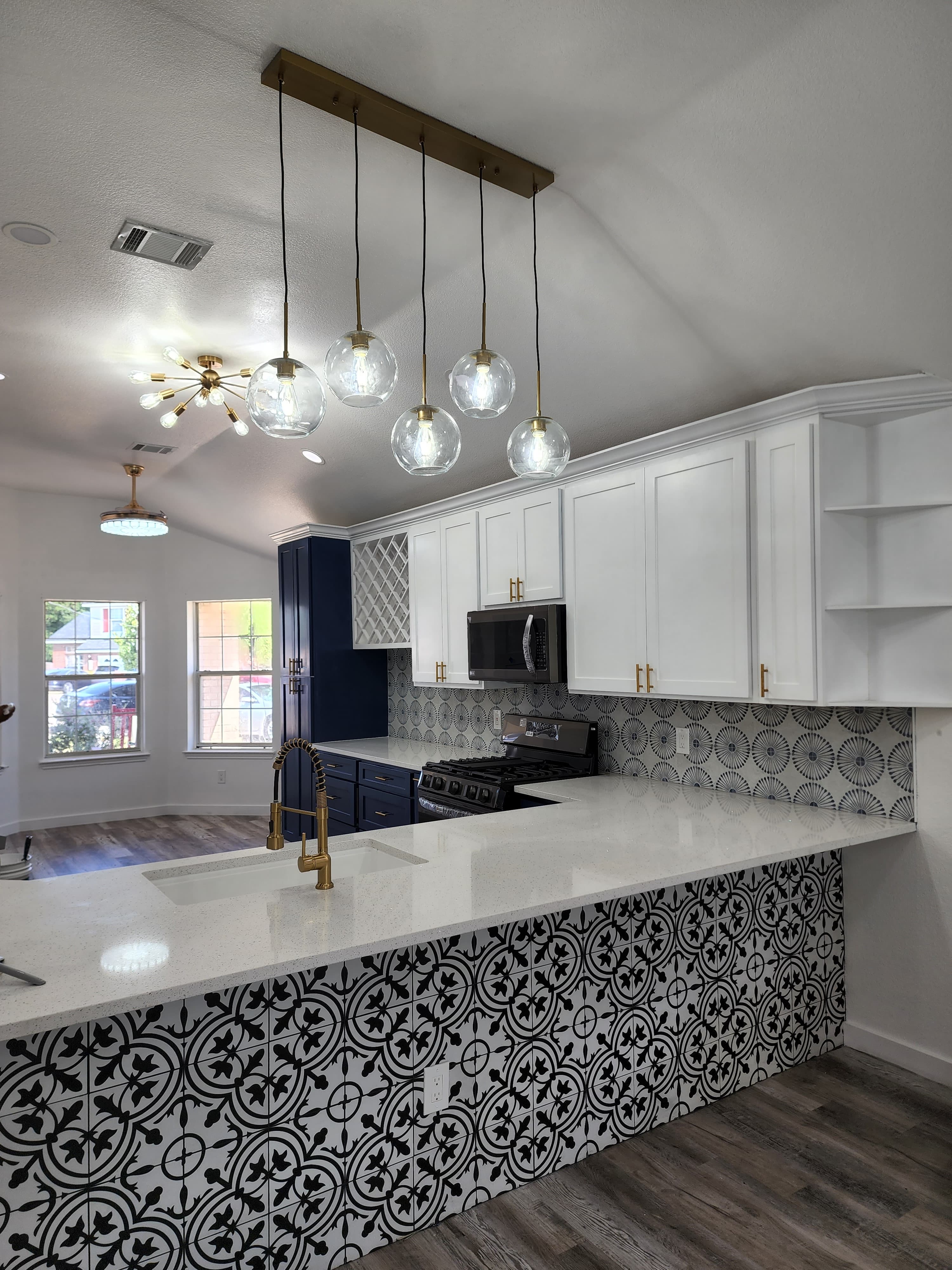
Drywall, texture matching, paint, flooring, tile, cabinets, and trim — remodel-grade finishes from the same GC that does this for a living, so the repair is invisible when it's done.
From first walkthrough to closed claim
Assess & Document
Walkthrough, DocuSketch 3D scan, photos, and a written Xactimate estimate — the format adjusters expect — before demo starts.
Secure & Demo
Board-up and tarp coordination if needed, then demo of charred and soot-damaged materials that can't be saved.
Deodorize & Rebuild
Odor materials removed and sealed, then the same licensed GC crew rebuilds — framing, drywall, paint, flooring, cabinets.
Fight & Close the Claim
We submit supplements for hidden damage and push your carrier for the full scope — then hand you a home restored and a claim paid right.
The first 48 hours — six moves that protect your home and your claim
Most of this list is about what not to do. A fire loss gets worse in the week after the fire, and usually through cleaning done in good faith. For what happens after that, the rebuild order of operations lays out the sequence.
Wait for the release
Do not re-enter until the fire department releases the property. Everything else on this list can be done late; this is the one that cannot be undone.
Do not wipe the soot
Soot is oily and abrasive. Wiping it drives it into surfaces it had not reached and can turn a cleanable wall into a repaint.
Photograph before anything moves
Wide shots and close-ups of every room, including the ones that only smell of smoke. Smoke damage outside the burn area is the part that gets written out of claims.
Open the claim — commit to nothing
Report the loss so the clock starts, but do not accept a scope, a preferred vendor, or a settlement figure in the first days.
Get the structure secured
If the roof or a wall is open to the weather, board-up and tarp come before anything else. Rain into a fire loss is a second claim on top of the first.
Keep every receipt
Lodging, meals, the clothes you had to buy this week. Loss of use is usually part of the claim, and it is paid from receipts.
Who's paying changes the whole answer
Restoration pricing splits cleanly in two, and almost every “what does this cost” article online ignores the split. A small loss you handle yourself and a loss your carrier pays for are not the same job priced differently — they are priced by two different people, in two different systems.
You're paying out of pocket
A contained event — a stovetop fire put out fast, a furnace puff-back, a small garage fire — is often cleanup, sealing, and repaint rather than a rebuild, and small enough that a claim is not worth the deductible. For work at that size we quote a flat number up front.
What actually moves the number
- How far the smoke travelled. Smoke goes everywhere the air went, and the burn area is usually the smallest part of the job.
- What porous material it got into — drywall, insulation, carpet pad, and framing hold odor in a way hard surfaces do not.
- Whether framing or structure is charred, which turns a cleanup into demo and rebuild.
- Whether the HVAC ran during or after the fire and carried soot through the ducts.
- Whether removing and sealing the source is enough, or the loss calls for specialized odor treatment.
- What the rebuild actually is: seal and repaint, or flooring, cabinets, and trim.
Call (512) 665-1073 and describe what happened — you'll get a real number on the phone, not a “we'd have to come look at it.” If we can't price it honestly without seeing it, we'll say that too.
Insurance is paying
Then the price isn't ours to set — and you should be wary of any contractor who hands you one. Insurance losses are priced in Xactimate, the estimating platform your adjuster uses. We write our estimate in the same software, at the same unit prices, so our scope and theirs line up line for line instead of arguing past each other.
What you pay is your deductible. The rest is between the policy and the estimate — which is exactly why the fight is over scope, not price. Is the wet subfloor in the estimate? Does the whole room get painted, or just the patch? Does the supplement go in when demo opens a wall and finds more? Those lines are where a claim is won or lost, and arguing them is our job, not yours.
Whether to file a claim at all is between you and your agent — deductibles, premiums, and your own claim history are their conversation to have with you. We'll explain honestly how each path works and leave the decision where it belongs.
The adjuster calls come to us
The part nobody warns you about isn't the cost — it's the phone. The adjuster wants measurements. Then photos of the back wall, by six o'clock. Then a question about what's under the flooring. Handled by a homeowner between work and dinner, that is how a claim quietly shrinks.
We take that off you: the estimate, the scope disagreements, the supplements, the photos on demand. The same person who answers the phone at two in the morning is the one who talks to your adjuster at two in the afternoon.
Timeline is a different question from price
Soot and odor work is measured in days. The rebuild after a structural fire is measured in weeks, and honest scheduling says so at the start rather than at week four. Odor is the part that cannot be rushed: masking it with fragrance is faster and it is not restoration.
An insurance job doesn't take longer because the work is slower. It takes longer because approvals sit between the steps — and the only thing that shortens that is documentation good enough that there's nothing left to argue about.
Your insurance company has an adjuster. Now you have one on your side.
When you file a claim, your carrier sends an adjuster whose job is to close the loss for as little as the policy allows. Most homeowners face that alone — and settle for a check that never covers the real damage. Not with Raging Bull. Our in-house insurance department goes to work for you: we document every dollar of damage, write the scope in the carrier's own software, and fight to get your claim paid for what it actually takes to rebuild.
We DocuSketch every loss
A full 3D scan and measured floor plan of your property, captured before demo. Hidden and secondary damage goes on the record — and an adjuster can't shortchange what's documented.
We submit the supplements
When we open a wall and find damage no one could see from the doorway, we photograph it, add it to the scope, and file the supplement — so it's covered by your carrier, not eaten by you.
You stay our client
First walkthrough to final invoice, we work for you — not the carrier. We don't stop pushing until your home is restored and your claim reflects the full loss.

All carriers. Property managers and adjusters: we already run make-ready and water-damage repairs for one of the largest property management companies in Texas across San Antonio multifamily properties. Direct line for portfolio work: apartment make-ready & unit turns.
Fire restoration across Greater San Antonio
Responding to fire and smoke losses for homeowners and property managers throughout the San Antonio metro.
- San Antonio
- Alamo Ranch
- Stone Oak
- Northwest Side
- Northeast Side
- Medical Center
- Schertz
- Converse
- Universal City
- New Braunfels
Fastest way to start your claim
Call (512) 665-1073 for an active emergency. Otherwise, send your details and we'll reach out to schedule an assessment and start documenting your fire loss for the claim.
Fire & smoke restoration FAQ
- It depends on who is paying, and the two paths are not the same job priced differently. If insurance is paying, the price is set in Xactimate — the same estimating platform your adjuster uses — and what you pay is your deductible; we write our estimate in that software and push for the full scope line by line, including the smoke damage outside the burn area that gets written out of claims. If you are paying out of pocket on a contained soot or puff-back cleanup, the number is driven by how far the smoke travelled, what porous materials it got into, whether framing is charred, whether the HVAC carried soot through the ducts, and what the repaint or rebuild involves. Call (512) 665-1073 and describe what happened — you will get a real number on the phone.
Before you call your carrier, read these
- After the fire: the rebuild order of operations →
What has to happen before anything gets rebuilt, why odor work comes before finishes, and where a rebuild stalls when the sequence is run out of order. - What a Texas homeowners policy covers →
Written for water losses, and the half about documentation, supplements and what “sudden and accidental” means to an adjuster reads the same on a fire claim. Fire fights are about scope rather than coverage — the smoke outside the burn area, the contents, the code upgrades a rebuild triggers.
Fire loss in your home?
Call now and we'll tell you straight what we can commit to today. Or send the property details and we'll schedule an assessment walkthrough.