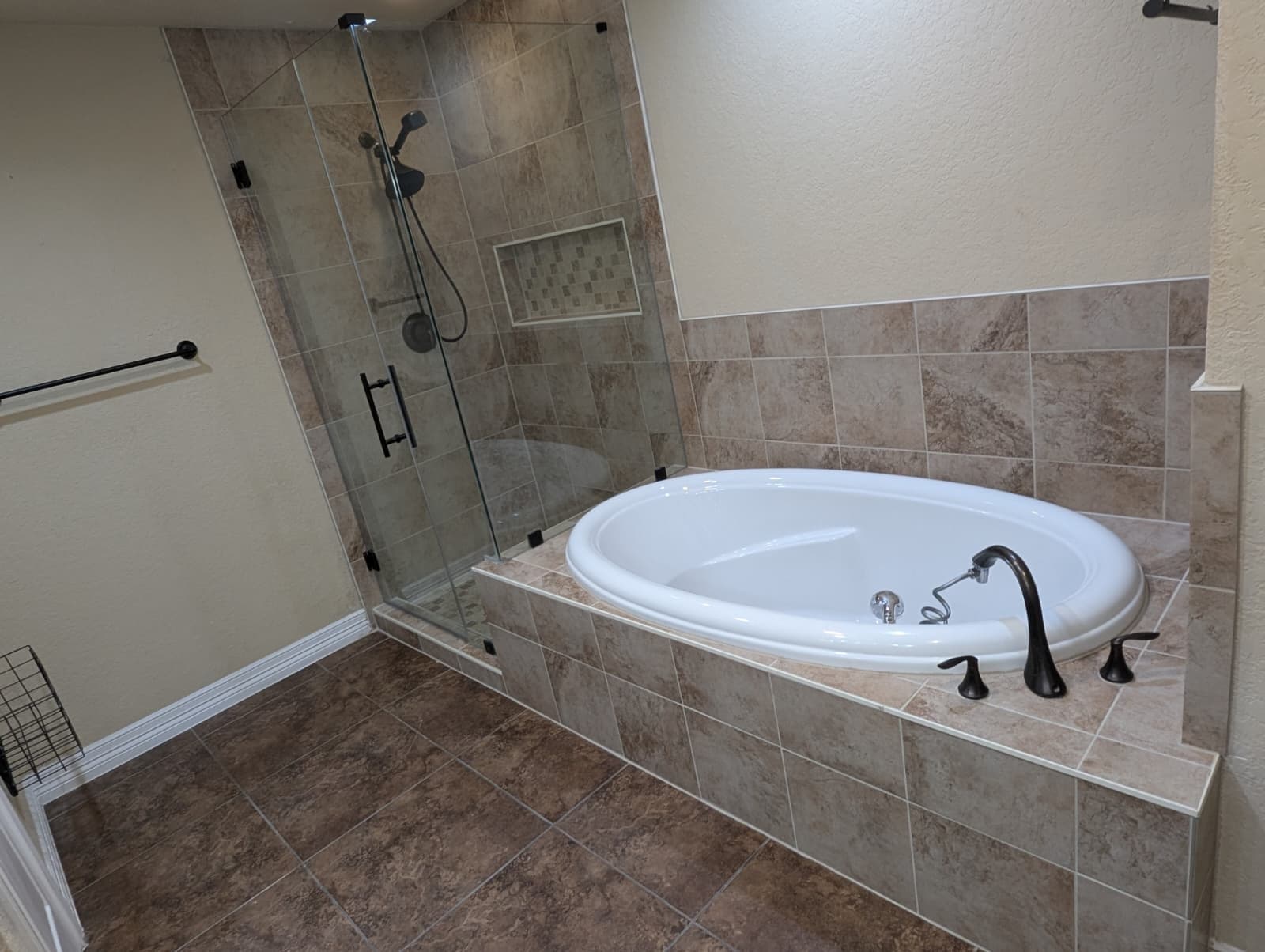
Slab Leak Repair in San Antonio: The Warning Signs Every Homeowner Should Know
By Rey Trevino · Published 2026-08-24 · 6-minute read
Looking for slab leak repair right now?
Here is the honest division of labour, because it decides who you call first. Finding the leak and repairing the pipe is licensed plumbing work — that is a plumber, not us, and anyone telling you otherwise is guessing with your foundation. Everything around it is ours: opening and re-pouring the slab, drying what the water reached, and rebuilding flooring, drywall, trim and paint. That second half is usually the bigger number and the part nobody plans for. We coordinate the plumber and run it as one schedule with one written price — call (512) 665-1073, answered 24/7.
Short answer: if your water bill jumped for no reason, you feel a warm spot on the floor, or you hear water running when everything is off, there is a real chance you have a slab leak — a pressurized water line leaking under your concrete foundation. In San Antonio it is not a rare problem. Our clay soil, our hard water, and thousands of slab-on-grade homes built from the '70s through the '90s make this one of the most common hidden repairs in the metro. This guide covers what a slab leak is, the five signs we see most, why it happens here, and exactly what to do — including where a licensed plumber's job ends and where the rebuild work begins.
What is a slab leak?
Most San Antonio homes sit on a slab-on-grade foundation: a poured concrete pad with the water and drain lines running underneath or inside it. A slab leak is a leak in one of those lines — usually a pressurized copper supply line — under the concrete where you can't see it, can't hear it clearly, and can't fix it without opening something up.
That last part is why slab leaks get expensive when they're ignored. The water has nowhere to go but into the soil under your foundation and up into your flooring. Left alone, it swells the clay, moves the slab, warps floors, wicks into drywall, and feeds mold. Caught early, it's a contained repair. Caught late, it's a foundation and flooring project.
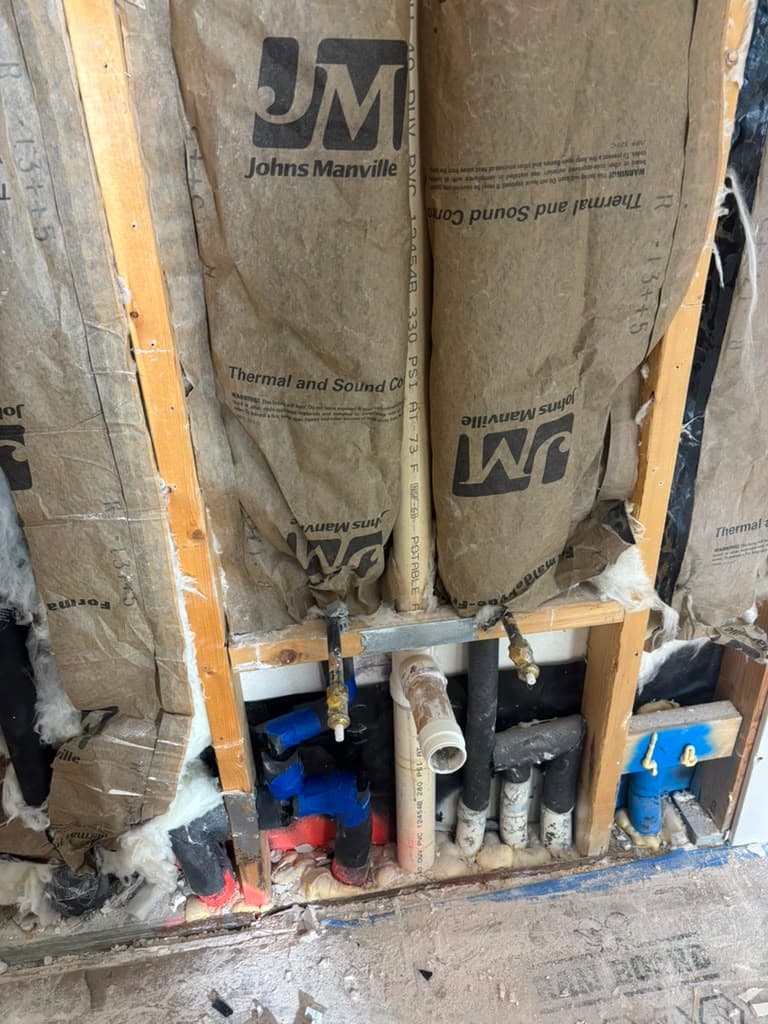
5 warning signs of a slab leak
After doing make-ready and restoration work across the metro, these are the signs of a slab leak we see homeowners miss most:
- 1. A water bill that jumped for no reason. The most common first clue. A pressurized line leaks 24 hours a day, so even a pinhole adds up fast. If your bill climbed and nothing about your usage changed, do the meter test below before you pay another inflated month. A high water bill with no visible leak anywhere in the house points under the slab.
- 2. Warm spots on the floor. Roughly half of slab leaks are on the hot water line. Hot water leaking under the concrete heats it from below, so you get a patch of tile or wood floor that feels warm barefoot — often near the water heater side of the house. Pets napping on one specific spot of the floor is a real tell; they find the warm patch before you do.
- 3. The sound of running water when everything is off. Turn off every faucet and appliance, then listen near the walls and floors — especially at night. A faint hiss or rush of water with everything off means water is moving somewhere it shouldn't be.
- 4. Cracks in floors, tile, or drywall. Water under the slab swells our clay soil unevenly, and the foundation moves with it. New cracks in tile, a crack running across the slab, doors that suddenly stick, or hairline cracks climbing the drywall can all be slab-movement symptoms with a leak underneath driving them.
- 5. Damp flooring, musty smells, or mildew. Moisture wicks up through concrete. Warped wood planks, tile grout that stays dark, damp carpet with no spill, or a musty smell in one room — especially along exterior walls or in closets — means water is coming up from below. Mold follows within days, not weeks.
Why San Antonio homes get slab leaks
Three local factors stack against us:
- Expansive clay soil. Much of the metro sits on clay that swells when wet and shrinks hard in drought. That constant movement flexes the foundation — and the rigid copper lines under it — until a joint or a worn spot gives. The 2022–2023 drought cycles were brutal on foundations from Stone Oak to the South Side.
- Hard water. San Antonio water is some of the hardest in Texas. Mineral buildup corrodes copper from the inside while the soil works on it from the outside.
- Slab-on-grade construction with aging copper. Whole neighborhoods went up in the '70s–'90s with soft copper lines run under the slab. Those lines are now 30 to 50 years old. If your home is that age and has never been re-piped, you're in the highest-risk group.
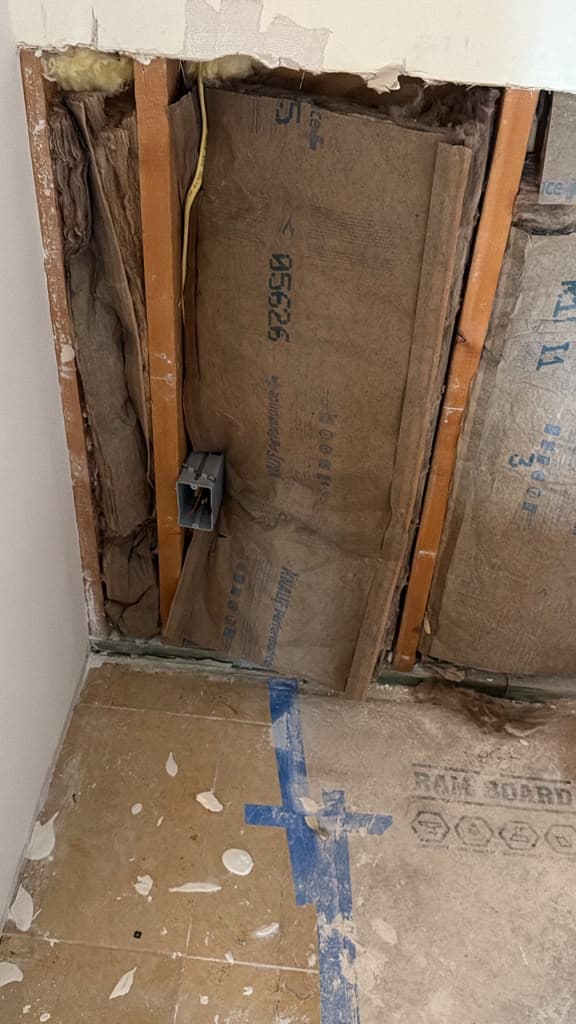
What to do if you suspect a slab leak
- 1. Do the meter test. Turn off every fixture and appliance, then watch your water meter for 15 minutes. If the dial or leak indicator moves with everything off, water is leaving the system somewhere.
- 2. Call a licensed plumber for detection. Leak detection and the pipe repair itself are licensed plumbing work — electronic listening equipment and line testing pinpoint the leak before anyone touches concrete. Repair options run from a spot repair through the slab to a reroute overhead, and slab leak repair cost in the area typically lands anywhere from around $600 for a simple access repair to $4,000+ for reroutes or tunneling, before restoration.
- 3. Don't stop at the pipe. This is the step homeowners get burned on. The plumber fixes the line and leaves — and you're left with a jackhammered floor, ruined flooring, wet drywall, and baseboards that need to come out. The plumbing repair is half the job. The rebuild is the other half.
How Raging Bull Contracting fits in
We're a San Antonio general contractor, and slab leak restoration is squarely what we do: the repair and rebuild side, working alongside licensed plumbers who handle the detection and the line itself. Full scope on the water damage restoration San Antonio page. When a slab leak hits your home, we handle:
- Access and concrete — opening and re-pouring the slab section cleanly instead of leaving a patch you'll trip over. Concrete is its own trade for us — see the concrete and foundations page.
- Flooring replacement — tile, wood-look plank, or carpet, matched to the rest of the house or upgraded while it's already open.
- Drywall, trim, and paint — cut out the wicked-up moisture damage, replace, texture-match, and repaint so you can't tell where it happened. If the leak ran long enough to feed mold, our mold remediation crew handles that before anything closes up.
- Bathroom and kitchen rebuilds — when the leak lived under a bathroom or kitchen, we rebuild it right, with real waterproofing behind every tiled surface.
One contractor coordinating the whole recovery, one schedule, and a fixed price before work starts — instead of you playing project manager between a plumber, a flooring guy, and a painter.
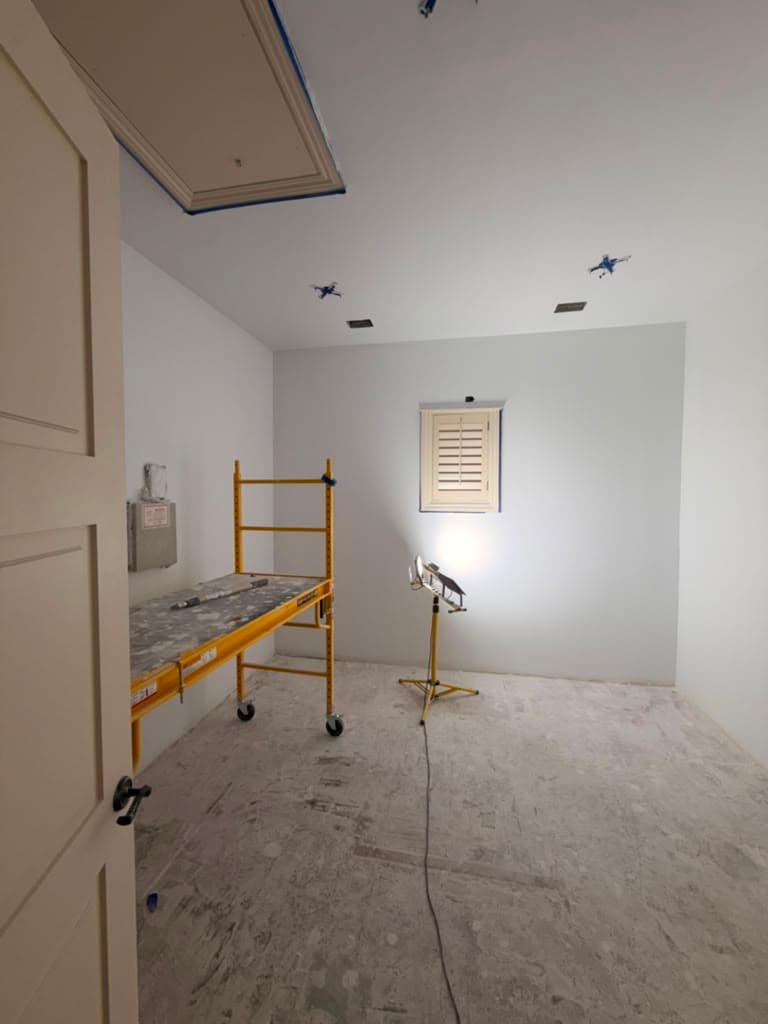
Think you have a slab leak? Move fast.
Every day a slab leak runs, the water bill climbs and the damage spreads. If you're seeing any of the five signs above, call us at (512) 665-1073 and we'll help you figure out the next step — including bringing in leak detection if you don't already have a plumber.
Slab leak damage? Get a fixed-price restoration estimate
We coordinate the plumber, open and re-pour the slab, and rebuild flooring, drywall, and paint — one schedule, one written price.
San Antonio slab leak FAQ
- The five signs we see most in San Antonio: a water bill that jumped with no change in usage, a warm spot on the floor, the sound of running water when everything is off, new cracks in tile or drywall, and damp flooring or musty smells. The fastest check is the meter test — turn off every fixture and watch your water meter for 15 minutes. If it moves, water is leaving the system somewhere.
Keep Reading
Real scope, real materials, real San Antonio pricing.